
Source citation: how to verify a model answer in a minute
Why this matters
- Understand why the same model answer is either fit to act on or worthless
- Know what to ask a vendor about verifiable answers before signing
- Get a measurable quality threshold instead of a promise that "the model rarely gets it wrong"
Source citation in plain words
An argument about a price breaks out in a shop. The salesperson walks to the shelf and points at the price tag. The conversation ends in ten seconds.
A model without links behaves like a salesperson answering from memory. The answer sounds confident and is often correct. There is nothing to check it against.
Source citation brings the price tag back. Next to every claim there is an address: document, section, paragraph. An employee opens it and sees where the line about the warranty period came from.
The figures below are planning benchmarks for a company of this profile, not a report on a completed rollout. Each comes with the method used to measure it, so it can be reproduced on other data.
How it works
The fifth step decides more than the rest. Silence is quick to check. A confident answer with nothing behind it is slow and expensive to check.
The level of detail in a link is a separate matter. A link to a 60-page policy saves the model work and shifts it onto the employee. A link to clause 4.2 with highlighting settles the question in seconds.
An example from practice
A benchmark for a services company: a legal team of 4, roughly 600 questions a month about contracts and internal policies. The first version of the assistant answered in coherent prose with no links.
The measurement was taken with a stopwatch on a sample of 30 answers. A lawyer read the answer, went into the knowledge base and confirmed every claim: 4–8 minutes per question. The assistant saved the reading and saved nothing on the checking.
In the second version the fragment addresses were carried through to the interface, and the documents were split into numbered clauses in advance. Checking the same type of question took 40–90 seconds on the same sample. Some answers came back marked "nothing found in the base" — those questions went straight to a person, with no invented wording to read first.
What the business gets
- The answer becomes a document rather than an opinion. It can be cited in correspondence with a client and in a ruling on a disputed case. Without a link, the same text stays a suggestion that gets double-checked anyway.
- A threshold appears that can be written into a contract. The share of answers with a working link and the share of answers matching the fragment cited are measured on a sample of 100 questions once a month. Both numbers are checked by a person.
- The cost of an error falls together with the time spent checking. The rough sum for a given process comes from the hallucination cost calculator, and the mechanism itself is unpacked in the article on hallucinations.
- The gaps in the knowledge base become visible. Questions with nothing to cite pile up on a separate list. That is a ready-made brief for expanding the knowledge base, assembled from real employee queries.
When this can be skipped
Links are unnecessary where the source is already in front of the reader. An incoming email is summarised, a 3-page contract is shortened, a text is translated. The original is open in the next window, and checking takes as long as following a link would.
Rough work does without citations too: draft wording, headline options, a meeting agenda. What is expected from the model there is material to edit, not facts.
The threshold is simple: citation pays off wherever a decision involving money or obligations rests on the answer. An amount, a deadline, a termination clause, a tolerance in a technical standard — a link is mandatory here.
What to check
First: ask to see an answer with an open link on the company's live documents, not a demo base. Look at the level of detail. If the link opens a whole file, the checking goes back to the employee and the saving disappears.
Second: test how the system behaves on a question the base has no answer to. The right response is a refusal with an explanation. A confident answer out of thin air means the cut-off threshold is not configured, and the approaches to it are described in the explainer on RAG.
Third: build paragraph-level document markup into the start of the project. The fragment address is lost at the very first step of assembly, and adding citation later costs more than doing it from the outset.
Frequently asked questions
What is source citation in plain words?
It is when every claim in an answer carries a link to the chunk of the document it came from: file, section, paragraph. An employee opens the link and sees the original in a few seconds. Without a link, the answer has to be checked all over again by searching the knowledge base, and the time spent checking eats up whatever automation saved.
Does a link to a document eliminate made-up answers?
Not entirely, but it drives down the cost of them sharply. A model can cite a real paragraph and still paraphrase it inaccurately. The upside is that the inaccuracy shows immediately: the reviewer compares the sentence with the highlighted fragment. The error is caught on the spot instead of surfacing at the client a week later.
At what level should the link point — file, page, paragraph?
A link to a file is close to useless: the employee opens 60 pages and searches by hand. The level that works is a paragraph or a numbered clause with highlighting. The difference is measured with a stopwatch: opening a highlighted paragraph takes seconds, finding the right spot in a whole file takes minutes. Paragraph-level markup is built in when the knowledge base is assembled.
How is citation quality measured?
Take a sample of 100 typical questions and count two shares. The first is the share of answers where the link opens and leads to the right fragment. The second is the share of answers where the text matches the fragment cited. Both are checked by a person, the measurement is repeated once a month and after every knowledge base update. The thresholds are set by the business.
What does it cost to add links to an existing answer?
Links carry no separate price tag: they appear when the answer is built from retrieved fragments and the addresses of those fragments are kept all the way through. The main work is marking documents up into paragraphs and storing the address alongside the text. The expensive path is the reverse one: bolting citation onto a system where the addresses were lost at the very first step.
Let’s discuss your project?
Tell us about your process — we’ll suggest where AI pays off fastest.
Related articles
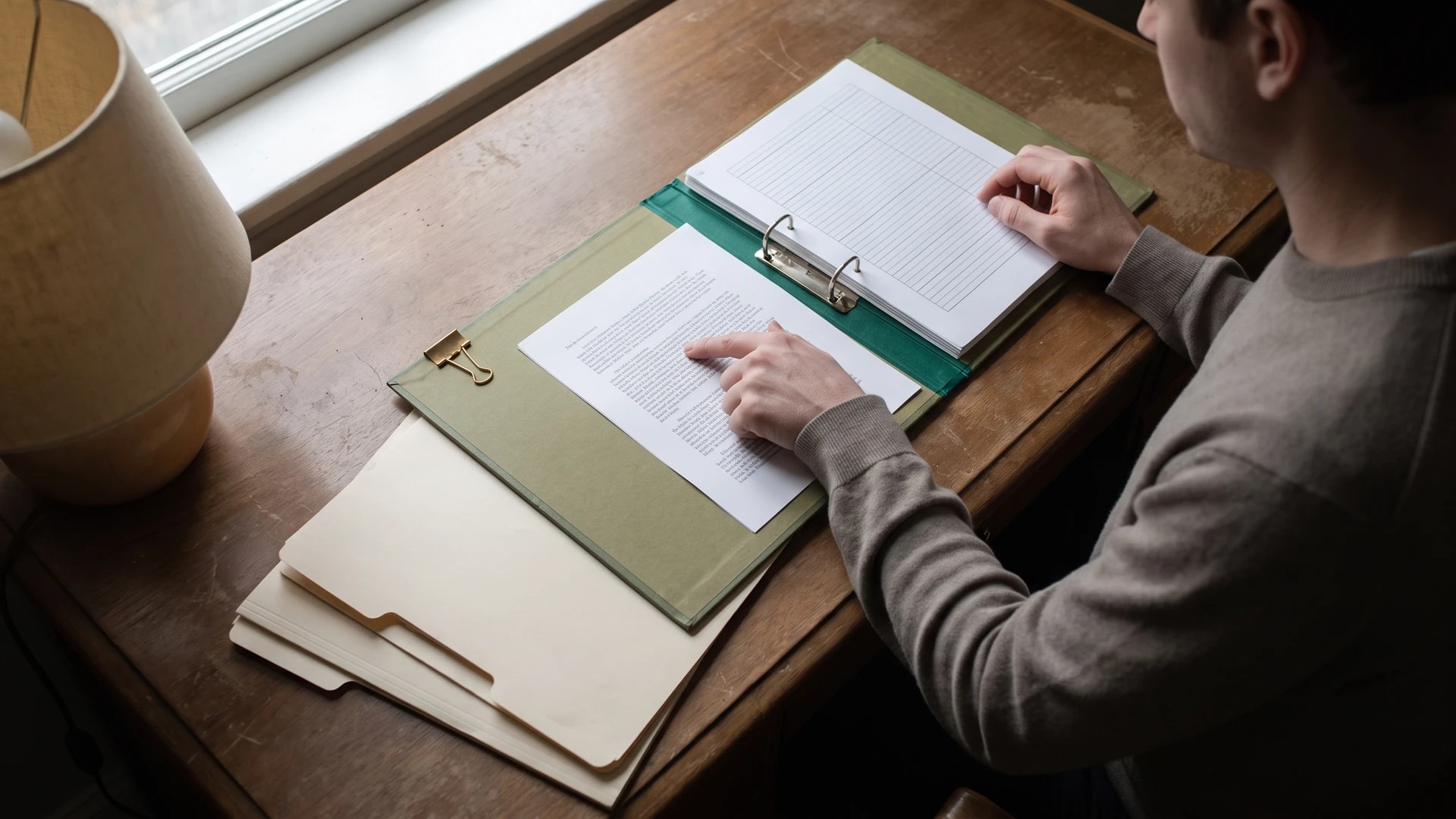
What is RAG: how to make a model answer from your documents
RAG is a way of working with AI where the system first finds the right passage in a company's own documents and then builds an answer from it.
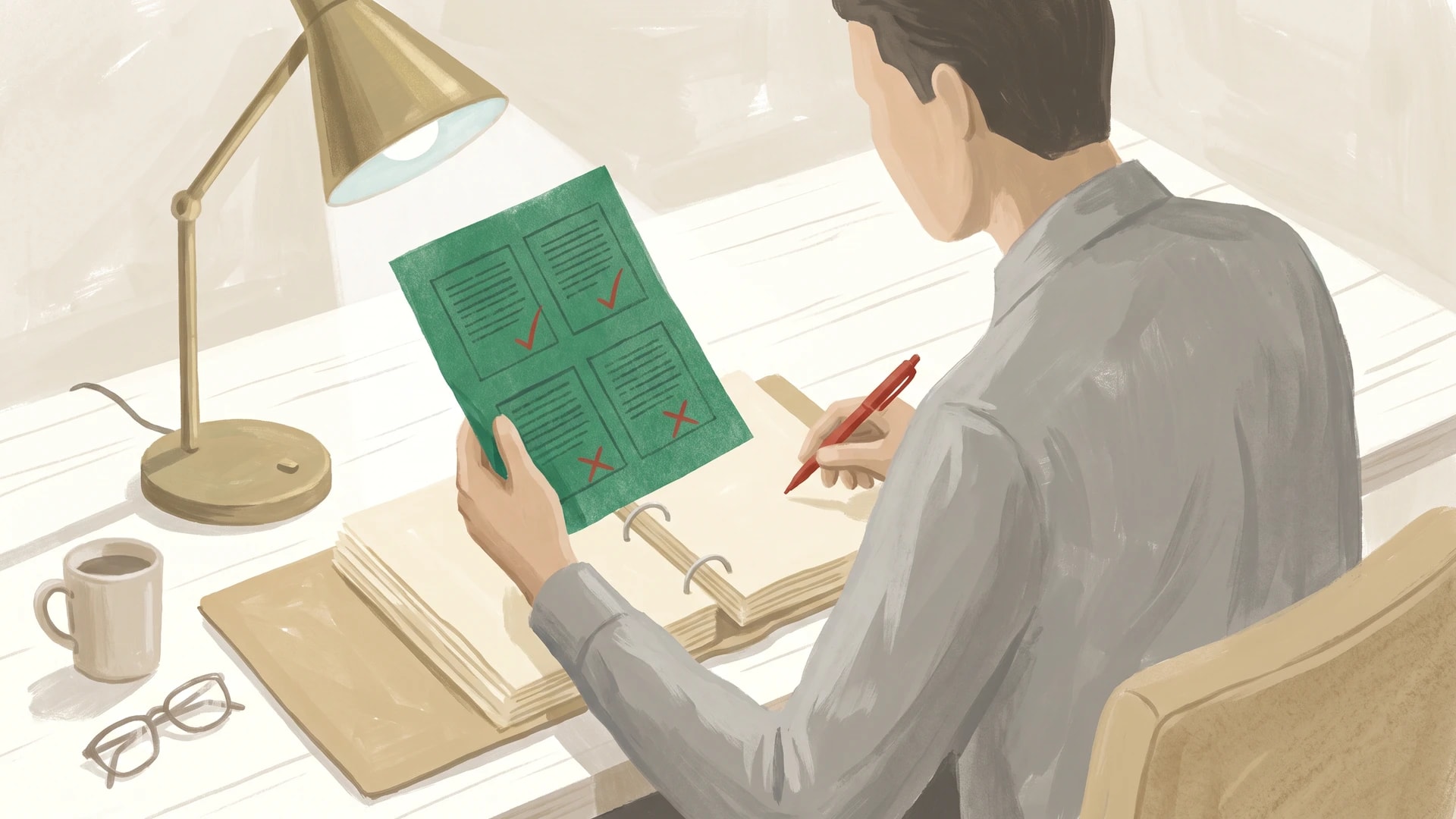
AI hallucinations: why models confabulate and how to catch it
A hallucination is a confident answer that looks plausible but does not match reality: an invented link, a made-up number, or a clause that appears in no regulation.